
We all know that consciousness is not always clear. It is often covered by noise, interrupted by anxiety, and pulled in many directions by constantly changing information. Screens, notifications, tasks, and speed in modern life continuously divide our attention. Many people feel exhausted not because of physical labor, but because their awareness has long remained in a fragmented state.
The presence of incense can subtly change this condition.
Scent does not require explanation, nor does it rely on language. It enters the nervous system directly and gradually gathers attention. Modern neuroscience suggests that olfactory signals bypass many of the brain’s complex cognitive pathways and move directly into regions associated with emotion and memory. When a scent appears, people often feel something first and only afterward begin to think. In this sense, smell is a very special sense. It does not enter consciousness through logic, but through feeling.
The French philosopher Maurice Merleau-Ponty once suggested that human consciousness is not purely an activity of thought, but something deeply connected with bodily experience. The world as sensed by the body continually shapes the structure of our awareness. Scent is part of this experience. When the smell in the air changes, consciousness changes with it.
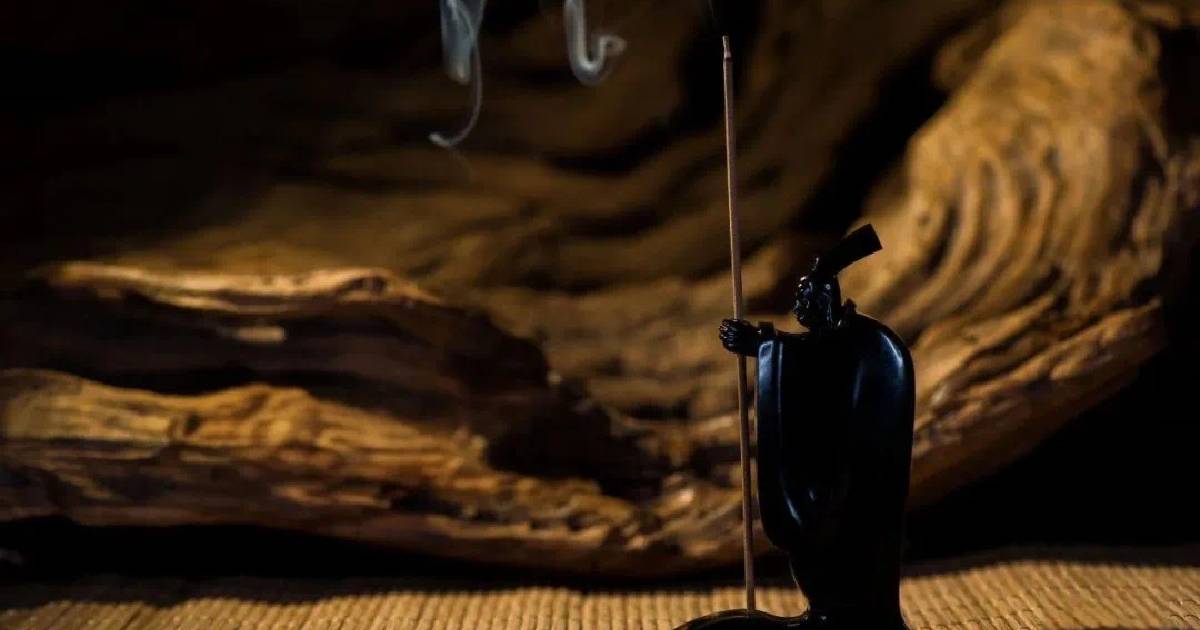
Ancient people understood this long ago. In traditional Chinese life, burning incense was never merely decorative. It often appeared alongside quiet sitting, reading, or reflection. In the study rooms of scholars, one often found the scene described as “a burner of incense and a scroll of books.” As the smoke slowly rose, time seemed to slow down. Incense played a role in organizing awareness. The rising movement of smoke is steady and gentle, and people’s breathing often unconsciously synchronizes with it. When breathing becomes even, the mind gradually settles. Many psychological changes that seem complex are, in fact, simply the restoration of rhythm.
Scent happens to possess this ability. It does not overwhelm the senses like visual stimulation, nor does it interrupt thought like sound. Instead, scent acts more like a background environment that gently returns consciousness to a stable state. For this reason, certain meditation and concentration practices use plant-based aromas as supportive tools. The scent becomes an anchor, helping awareness stop drifting in many directions.
Incense is not thought, yet it can influence the way thoughts arise.
In the modern commercial world, people have begun to recognize this as well. Many spaces that require deep focus—such as reading environments, healing spaces, or wellness centers—intentionally design stable scent atmospheres. Aroma becomes part of spatial order, helping those who enter the space become calm more quickly.
For example, some high-end bookstores and cultural spaces use gentle woody aromas to create an environment suitable for long periods of reading. Many technology companies introduce natural plant scents into office environments to reduce anxiety and support focused thinking. In this context, scent plays a role very similar to the incense burner in an ancient scholar’s study. It is not decoration, but a form of environmental technology. When scent is stable, the space becomes stable; and when space becomes stable, consciousness more easily finds stability. This is the new value of incense in modern life.
Plants seem to have always performed this quiet work. Aromatic plants release scent molecules through leaves, flowers, or resins. These molecules disperse through the air and form a subtle field of fragrance together with the environment. When people breathe within it, they enter a quiet exchange with the plant world. Through this exchange, awareness begins to change. Thoughts no longer surge like waves but gradually become clear. Attention gathers again, time seems to slow down, and consciousness finds a renewed order.
Incense is not thought, yet it can influence the way thoughts take shape.
In the air, it creates a quiet order, allowing awareness to find its direction once again.